The short trial is the common trial
For most prosecutors, jury trials come in days, not weeks: a morning of voir dire, an afternoon of evidence, closings the next day. Then another one two weeks later. The marathon trial happens, but it isn't the rhythm of the job — the rhythm is volume, and volume changes how selection works.
In a short trial, voir dire is a bigger fraction of everything. It can be the longest single phase of the case. The jury you seat by lunch decides a verdict by tomorrow afternoon, with no weeks of testimony to soften a bad selection call. Proportionally, no phase of a short trial matters more.
Compressed math, compressed time
Short trials usually mean fewer peremptory strikes — in many jurisdictions a misdemeanor panel gives each side half or less of what a felony does. Fewer strikes means each one is a bigger share of your total ammunition, and a wasted strike hurts proportionally more than it would in a capital case.
The clock is compressed too. Judges running busy dockets give you a voir dire window, not a voir dire day — sometimes thirty minutes for the whole panel. There is no time to form first impressions in the room. Every question has to be triage: confirming or moving a position you already hold, not building one from scratch.
Prep has to fit inside a working week
The juror list for a short trial arrives days out, sometimes the afternoon before — and it lands on top of a docket, not instead of one. Nobody is clearing three days to work the panel for a DUI.
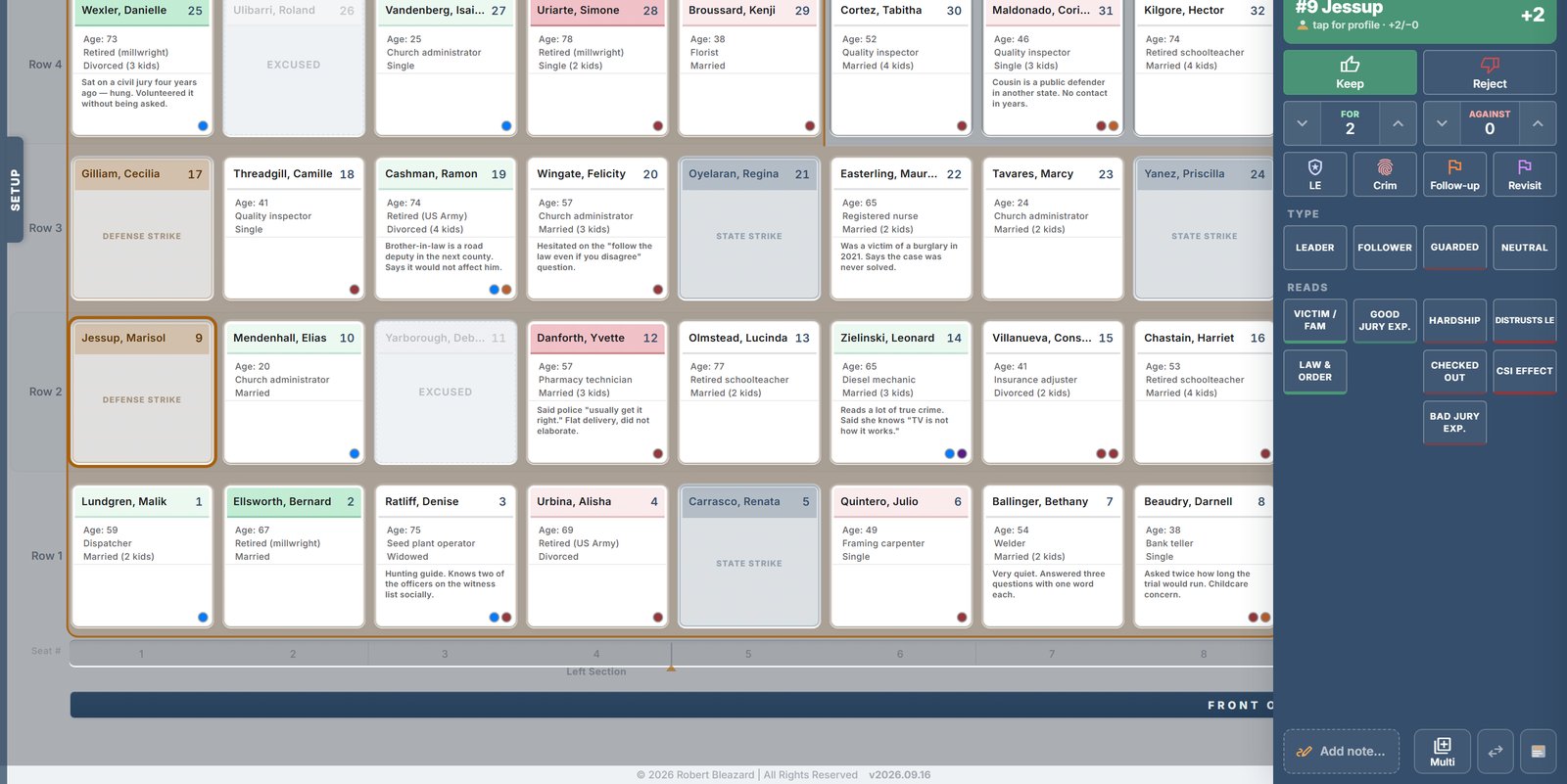
So the prep has to be fast or it won't happen at all. The realistic standard: get the list into working shape in minutes, then spend the single hour you actually have on the jurors, not the paperwork. Rate what the list supports, flag the law enforcement connections and prior jury jurors, mark the handful who need a direct question. An hour of that beats three hours of retyping names into a spreadsheet — which is the hour most deputies actually lose.
You're probably alone at the table
The big-trial playbook assumes a second chair tracking the panel while you question it. Misdemeanor deputies mostly try cases alone. There is no one to maintain the chart while you talk, no one to catch the answer you missed while writing, no one to reconcile the strike count at the bench.
That's the real argument for system over memory in short trials. Whatever tracks the panel has to do the second chair's job: keep the chart current, hold the count, surface your own pre-trial flags at the moment the juror is speaking. A solo lawyer with a good system works like two people. A solo lawyer with a legal pad works like half of one.
The turnaround is the point
The trial ends Thursday. There's another panel in two weeks. The short-trial prosecutor's edge compounds across selections, not within one: the question that exposed the hidden bias this time goes into next trial's outline. The courtroom you configured once is ready when you draw it again. Export the record, close the file, start the next one clean.
This is the part the marathon-trial playbook can't see. For an office trying cases constantly, jury selection isn't an event to be gamed once — it's a repeating process to be made fast, consistent, and reviewable. Improve the process one notch and you've improved fifty trials a year.
JuryPanel was built inside this rhythm — by a prosecutor picking juries for the trials that start Tuesday and close Thursday. Import the list in minutes, walk in with a position on every juror, track the strikes solo without losing the count, export the record, and do it again next week.
Request a demo and see it at trial speed.