What JuryBox and JuryBoard do well
Credit where it's due. JuryBox is an established, polished tool that serves prosecution, defense, and civil attorneys, with solid challenge tracking and questionnaire handling. JuryBoard is a clean iPad-first app with strong drag-and-drop seating and offline use, marketed by and for trial lawyers. If you're an individual attorney across mixed practice types, either can serve you well.
The question isn't whether they're good. It's whether they're built for your office.
Competitor pricing and platform details in this guide are current as of June 2026 and may change — verify against each vendor's site.
Where a prosecutor's office feels the gap
Audience. Both serve trial attorneys generally. A tool built for everyone — civil, defense, prosecution — can't be shaped around the way prosecutors specifically try cases: the flags that matter to the State, the volume of short trials, the jurisdiction's strike system.
Platform. A heavily iPad-oriented tool means buying, managing, and standardizing iPads across the office. A web-native tool runs on the computers and iPads your office already owns — no App Store, no IT project.
Pricing. Per-user and per attorney subscriptions are priced for firms that bill by the hour. Multiply a monthly per-seat rate across a DA's office and the number stops being discretionary. Office budgets need a different model.
Coverage. Per-seat licensing means you pay for each user you add — paralegals, investigators, the deputy who only tries a few cases. An office-wide license covers the whole staff as one line item.
What "built for prosecutors" changes
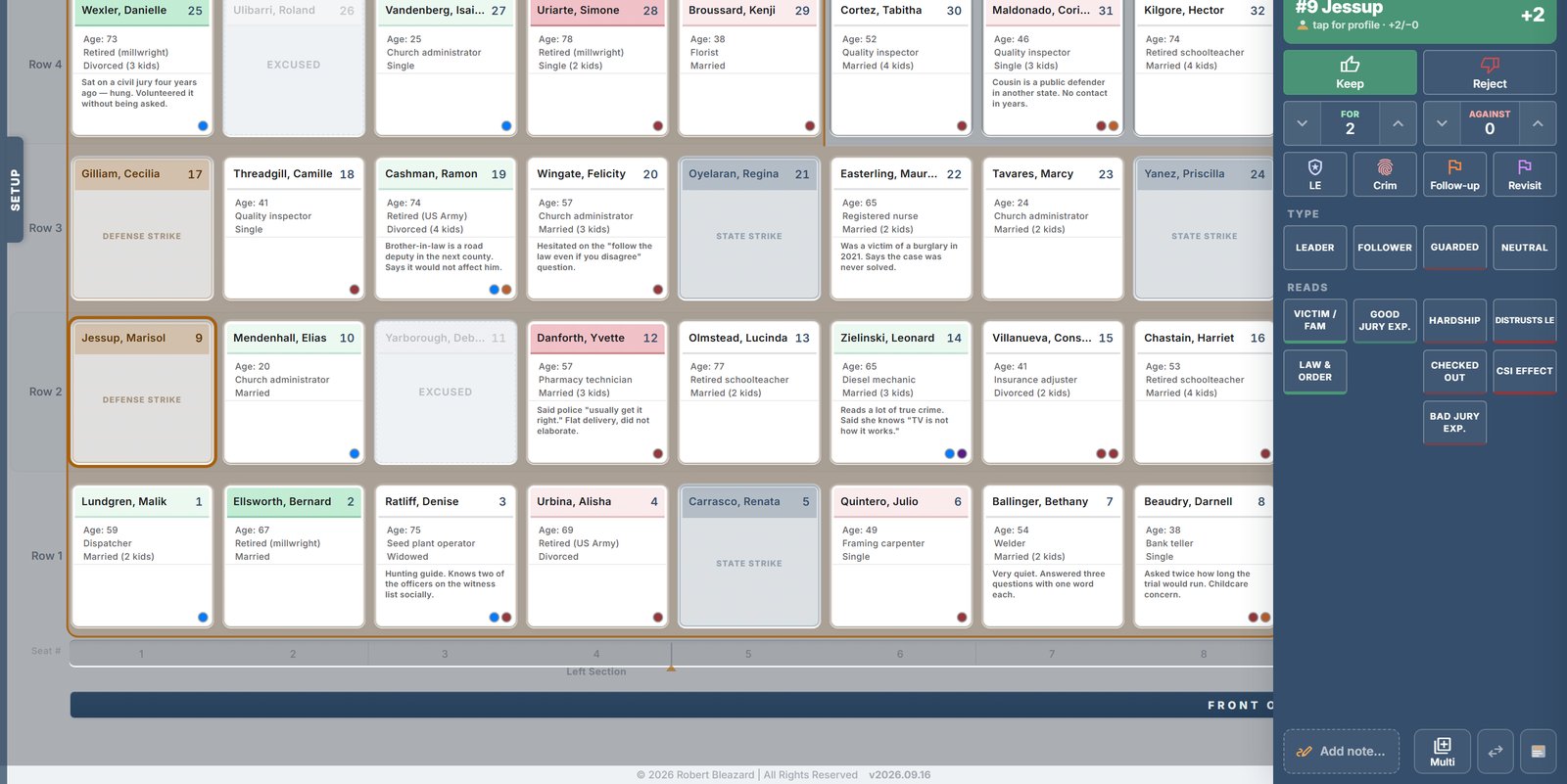
JuryPanel starts from the prosecutor's workflow instead of adapting a general tool to it. It renders your jurisdiction's actual system — strike-panel, struck-jury, stand-and-strike. It flags what matters to the State. It's priced per attorney per year as an office-wide license, so the whole staff has access, not just the attorneys you count. And it runs in the browser on the devices you already have.
It's also built by someone who still tries cases — so the decisions reflect what a trial docket actually demands, not what looks good in a demo.
When to stay where you are
If you're a solo practitioner or a mixed-practice firm, JuryBox or JuryBoard may genuinely be the better fit — they're built for that buyer, and switching costs are real. This isn't an argument that they're worse tools.
It's an argument that "best jury selection app" has a different answer depending on who's asking. For a prosecutor's office, the honest answer is a tool built for prosecutor's offices.
How to compare for yourself
Put the options side by side on the five questions that actually decide fit: who it's built for, what it runs on, how it's priced, whether it fits a high-volume trial docket, and whether it covers the whole office or just the paying seats. Then ask each vendor to show you, with your jurisdiction's strike rules, on the devices your office already uses.
If your office is evaluating JuryBox, JuryBoard, or any general-purpose jury selection tool, it's worth seeing what a prosecution-first one looks like first. JuryPanel is built for prosecutor's offices, priced for government budgets, and demoed by the prosecutor who built it.
Request a demo and bring the hard questions.